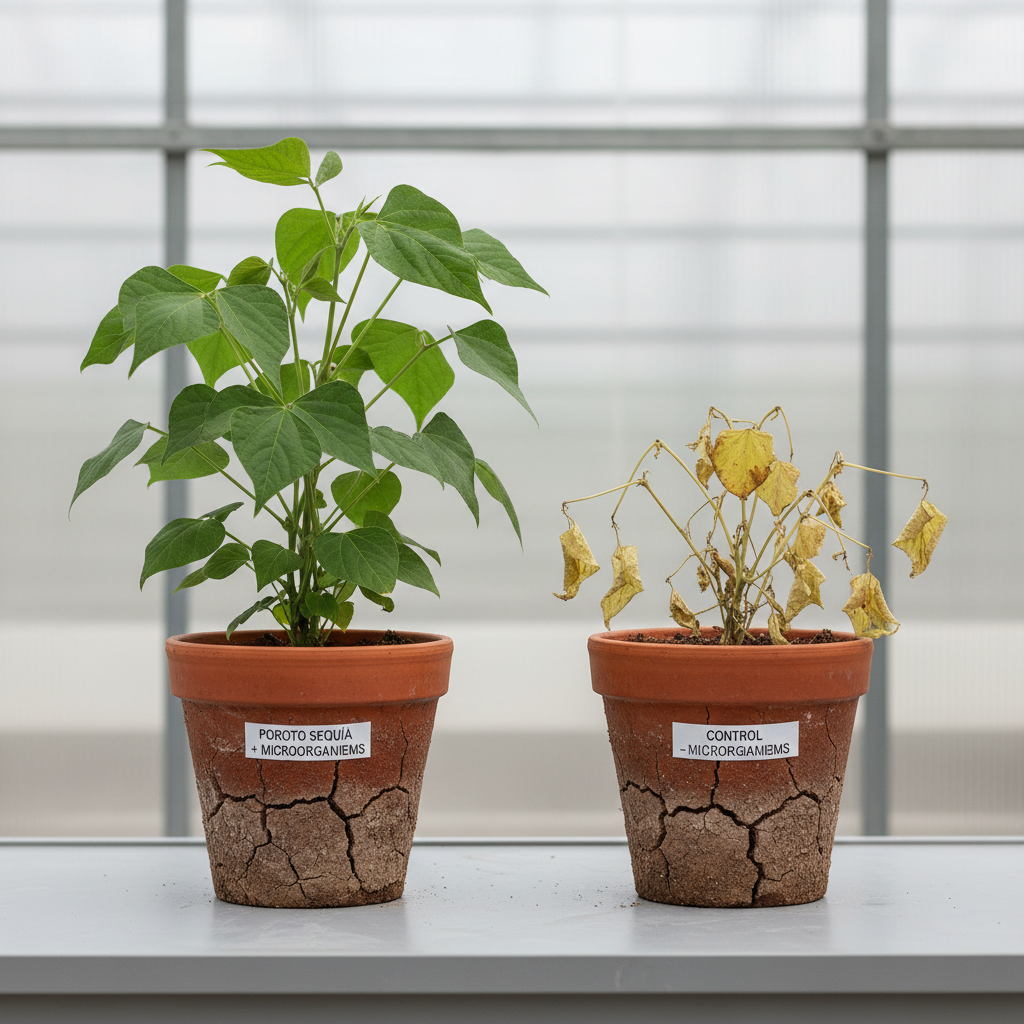
A side-by-side photographic realism comparison of two potted common bean plants grown in identical, visibly dry soil. On the left, a ‘poroto sequía’ plant treated with beneficial soil microorganisms appears vigorous, with upright stems and lush green leaves. On the right, a control plant without microorganisms shows drooping stems and yellowing foliage. The pots rest on a clean, neutral lab bench with a softly blurred background of a greenhouse structure. Bright, diffused daylight filters through translucent panels, creating even illumination and soft shadows beneath the pots. Captured at eye level with both plants in sharp focus, the composition emphasizes the contrast in plant health, conveying a clear, educational message about microbial support in drought conditions.

Porotos que resisten la sequía

Descubre cómo microbios del suelo ayudan al poroto común a producir con menos agua.

Ciencia para porotos resistentes

Proyecto Micrópolis
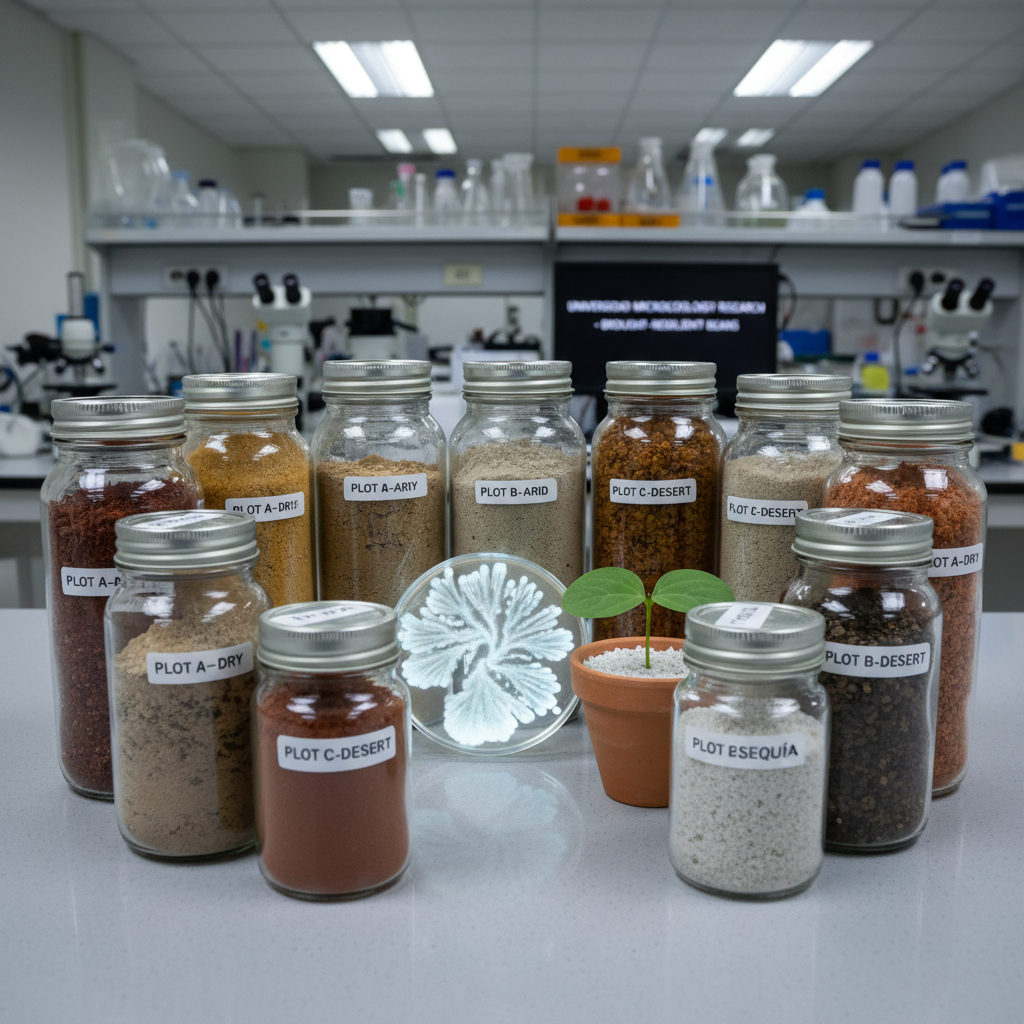
A tidy laboratory bench in photographic realism featuring an array of labeled soil sample jars from different dryland plots, each filled with distinct textures and colors of soil. In the center, a transparent Petri dish displays a colony pattern representing beneficial soil microorganisms, positioned beside a small potted ‘poroto sequía’ seedling in sterile substrate. The bench surface is smooth and light-colored, with a blurred background of scientific equipment and shelves to keep focus on the samples. Cool, even overhead lab lighting creates minimal shadows, emphasizing cleanliness and precision. Shot from a slightly elevated angle with balanced composition, the atmosphere feels professional, rigorous, and organized, ideal for communicating university-level microbiology research on drought-resilient beans.

Universidad Autónoma de Chile

An underground cross-section view in photographic style showing the root system of a ‘poroto sequía’ bean plant penetrating dry, sandy soil. The roots are detailed, with small rounded nodules where soil microorganisms live, surrounded by fine root hairs clinging to soil particles. Above ground, the stem and a few resilient green leaves emerge into a bright, arid landscape with sparse vegetation. Soft, diffused daylight illuminates both the surface and underground layer, revealing soil structure and subtle moisture gradients. The mood is analytical yet optimistic, with a clean, modern research aesthetic. The composition is horizontally split between soil and air, captured with sharp focus throughout to highlight scientific detail for an educational context.
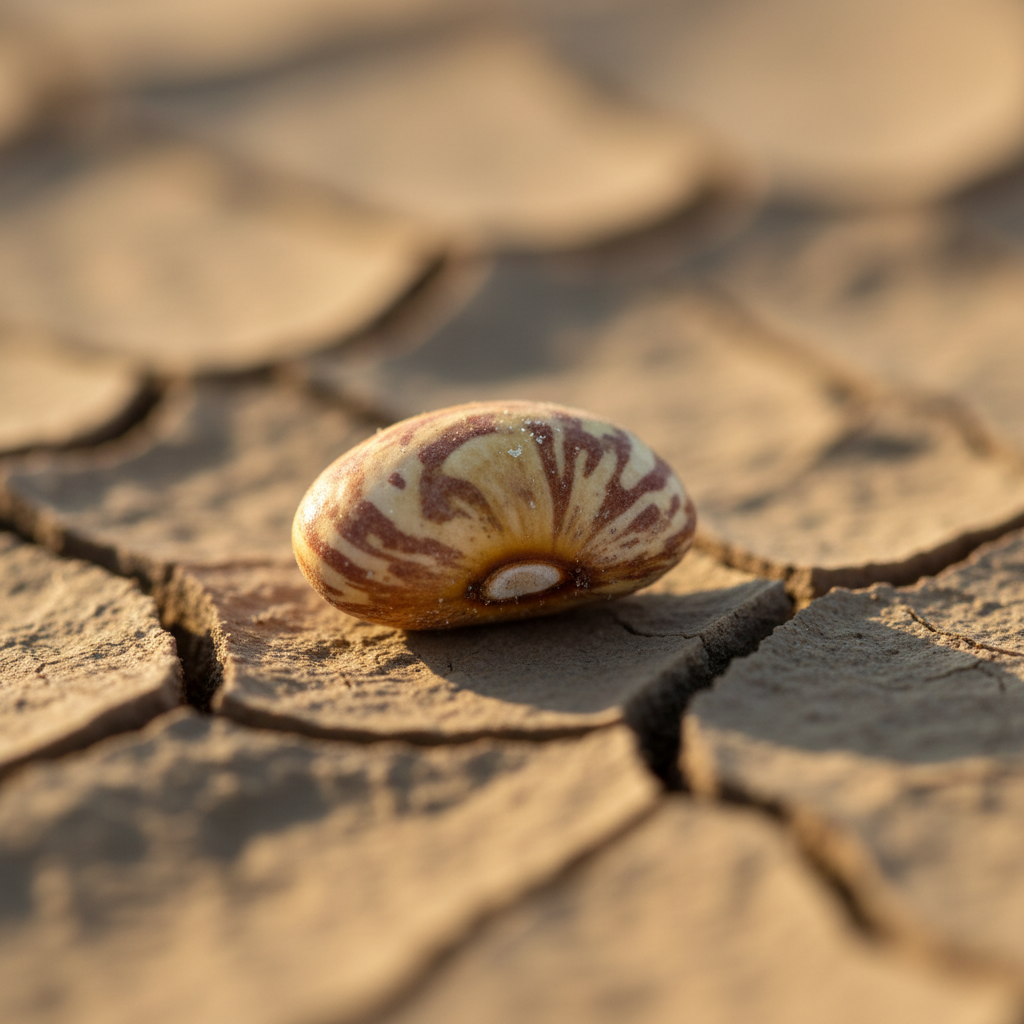
A high-detail, photographic-style macro image of a single ‘poroto sequía’ bean seed resting on dry, cracked soil. The seed coat displays subtle marbling and natural color variations, with a faint, delicate texture visible on its surface. Fine grains of dust cling to the seed, emphasizing the harsh environment it faces. Soft, directional natural light from one side creates gentle highlights on the seed and deep shadows in the soil fissures, adding depth and drama. The background falls into a smooth, muted blur to keep attention on the seed as a symbol of resilience and scientific inquiry. Framed tightly with a shallow depth of field, the mood is contemplative, precise, and quietly optimistic.
A side-by-side photographic realism comparison of two potted common bean plants grown in identical, visibly dry soil. On the left, a ‘poroto sequía’ plant treated with beneficial soil microorganisms appears vigorous, with upright stems and lush green leaves. On the right, a control plant without microorganisms shows drooping stems and yellowing foliage. The pots rest on a clean, neutral lab bench with a softly blurred background of a greenhouse structure. Bright, diffused daylight filters through translucent panels, creating even illumination and soft shadows beneath the pots. Captured at eye level with both plants in sharp focus, the composition emphasizes the contrast in plant health, conveying a clear, educational message about microbial support in drought conditions.